WHY THIS RESOURCE MATTERS
Turn ‘looks clean’ into a repeatable handoff
Cleaning quality becomes easier to manage when the expected result is defined by area, surface, use, and inspection time. A polished entrance, hygienic washroom, dust-free high ledge, and construction-clean floor require different checks, tools, and acceptance conversations.
Inspect after the cleaning team has had reasonable access and before new activity contaminates the area. Distinguish missed work from permanent damage, wear, staining, or a maintenance defect; sending a cleaner back to an unrepairable surface creates repeated disputes without improving the handoff.
CHECKLIST
What to include
- 01Entrance and reception
- 02Floors and carpets
- 03High-touch surfaces
- 04Washrooms
- 05Kitchen or break area
- 06Waste and recycling
- 07Glass and mirrors
- 08Fixtures and furniture
- 09Consumable supplies
- 10Rework owner and verification
WHAT TO LOOK FOR
Quality issues that need an exact surface
High-touch points
Handles, switches, rails, controls, and shared surfaces should be checked against the agreed service and use of the space.
Edges and hidden zones
Corners, skirtings, under furniture, high ledges, and areas behind doors often reveal inconsistent coverage.
Floor result
Dust, debris, streaking, residue, missed edges, wet areas, and unsuitable finish should identify material and room.
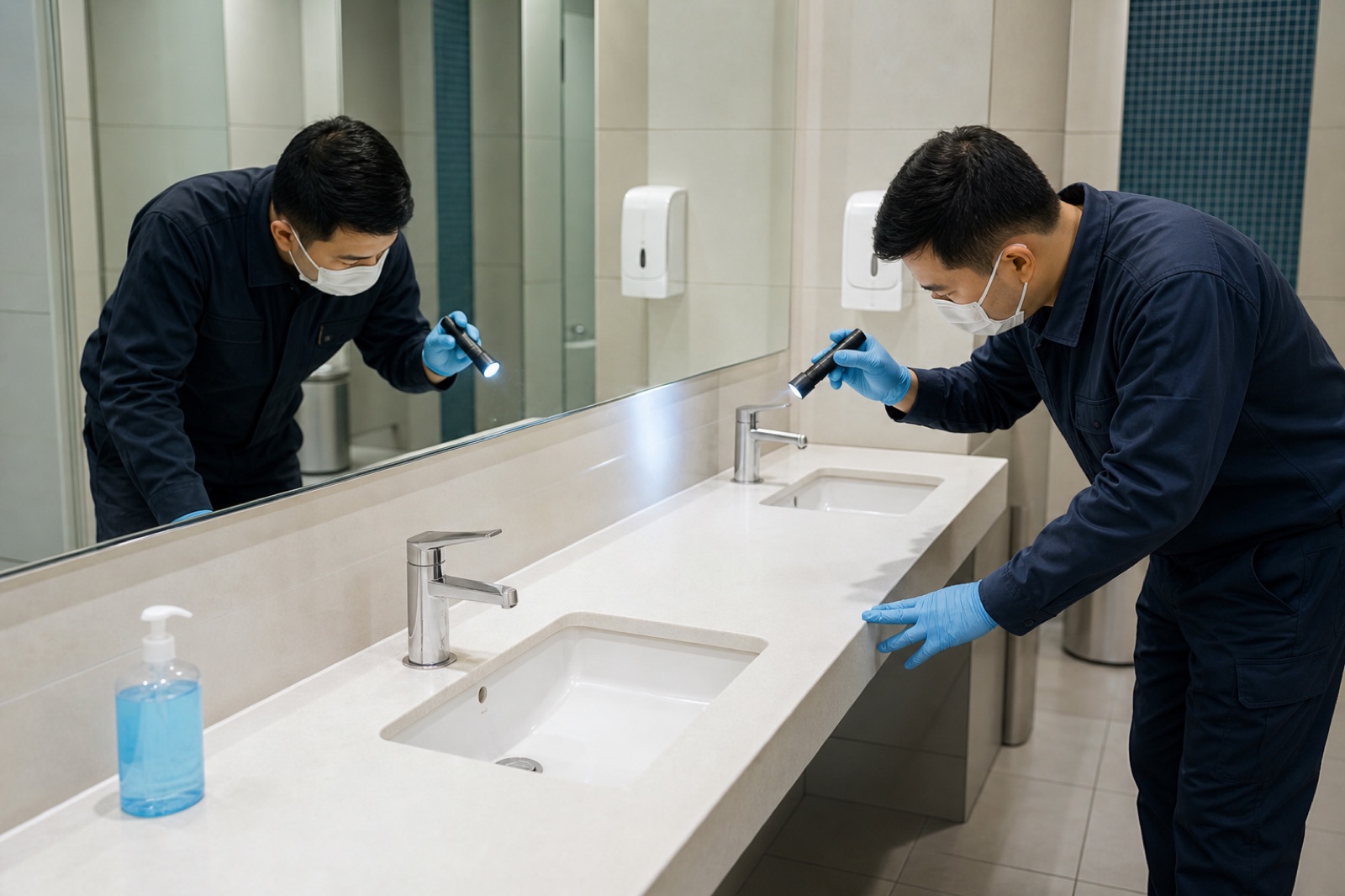
Washroom readiness
Visible soil, odor, wet floors, fixtures, dispensers, consumables, bins, and touchpoints need separate actions where appropriate.
Damage versus cleaning
Scratches, etching, failed sealant, paint marks, adhesive, and worn finishes should be routed to the correct maintenance or trade owner.
FIELD WORKFLOW
How to use this template
- 1
Confirm the service scope, excluded surfaces, access, room use, completion time, and accepted sample before inspecting the cleaned area.
- 2
Use a consistent high-to-low and clockwise route under representative lighting, checking surfaces without creating cross-contamination or slip exposure.
- 3
Record the exact surface and result, classify cleaning rework separately from damage or maintenance, and agree when the area will be reinspected.
- 4
Verify rework before reopening or handoff, then review repeated findings by area and cause to improve staffing, access, tools, or sequencing.
PRIORITY GUIDE
Use the space to set the response
Restrict or reclean now
Use for hygiene concerns, slip exposure, sharps, bodily fluids, or conditions preventing safe reopening of the area.
Rework before handoff
Use when the agreed cleaning result is visibly incomplete and the space can remain controlled until correction.
Improve the next service
Use for recurring edge work, supply, sequencing, access, or method issues that need a process change.
FIELD EXAMPLE
Example: marks that are not a cleaning failure
If dark marks remain on a lobby tile, identify the tile zone, lighting, and whether the mark transfers during an approved spot check. Photograph the wider floor and close detail. If it appears to be adhesive residue, assign cleaning rework; if the surface is scratched or etched, route it to the flooring owner. That distinction prevents repeated cleaning attempts and gives the client a truthful readiness record.
BEFORE YOU START
Adapt it to the job
Names, inspection frequency, acceptance criteria, retention rules, and sign-off responsibilities vary by project and jurisdiction. Remove irrelevant items and add the exact standards, drawings, specifications, and responsible people that apply to your work.